
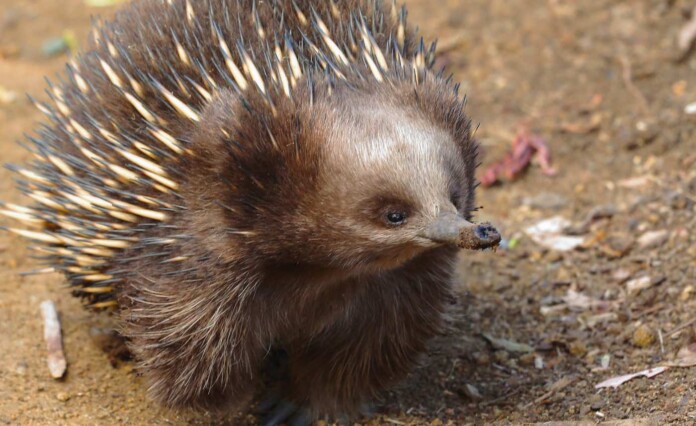
 Long-Beaked Creature Is Proven Not Extinct in First Ever Photos: ‘Blows My Mind’ After 60 Years: An egg-laying mammal named in honor of Sir David Attenborough has been rediscovered after it was thought extinct for more than 60 years. This extremely strange animal is just one of two extant mammal species on Earth that lays eggs. According to the conservation org Re:wild, it’s one of just five surviving species of monotreme, an ancient clade of egg-laying mammals found only in Australia and New Guinea, whose origins go back to the Jurassic era some 160 million years ago. There are three long-beaked echidna species. One is critically endangered, but this one, Zaglossus attenboroughi, is known only from a single individual collected by a Dutch botanist during an expedition to the Cyclops Mountains in 1961. “I was euphoric, the whole team was euphoric,” Dr. James Kempton told BBC News of the moment he spotted the Attenborough echidna in camera trap footage. “I’m not joking when I say it came down to the very last SD card that we looked at, from the very last camera that we collected, on the very last day of our expedition.” It’s the stuff of dreams, and Kempton was able to telephone Sir David with the news, with the famous filmmaker saying he was “absolutely delighted.” Lasting four weeks, the expedition included biologists from several universities from the UK and Czechia, Re:wild, and YAPPENDA, an Indonesian conservation-focused NGO. The expedition was looking in some of the most remote rainforest on Earth in the northern highlands of the Indonesian half of New Guinea, and they also discovered a new frog species, several dozen new insects, and observed “healthy” populations of tree kangaroos as well as the most famous New Guinea residents: birds of paradise. In fact, the team found so much life, and worked closely alongside the native community who play a game of ‘seek the echidna’ as a form of feud resolution, that all the members came down certain the area needed to be protected. “One of the goals of YAPPENDA is to ensure the preservation of the Cyclops Mountains and their remarkable biodiversity,” said Malcolm Kobak, cofounder of YAPPENDA. “To see photos of this endemic species is both encouraging and inspiring. The [echidna] holds a special place in the traditions of the Indigenous inhabitants of the Cyclops and is emblematic of Cyclops’ conservation efforts.” Re:wild was just one part of the expedition, but they’re getting used to this kind of good news and good press. Their “25 Most Wanted” initiative to document missing species has so far financed the rediscovery of 9 other animals from all the major orders around the world that have been presumed extinct.These include Jackson’s climbing salamander, the silver-backed chevrotain, the Somali sengi, the velvet pitcher plant, Wallace’s giant bee, the Fernandina giant tortoise, Voeltzkow’s chameleon, the Pernambuco holly tree, and the Siera Leone crab. Long-Beaked Creature Is Proven Not Extinct in First Ever Photos: ‘Blows My Mind’ After 60 Years |
Family Discovers 8 Huge Dinosaur Footprints..
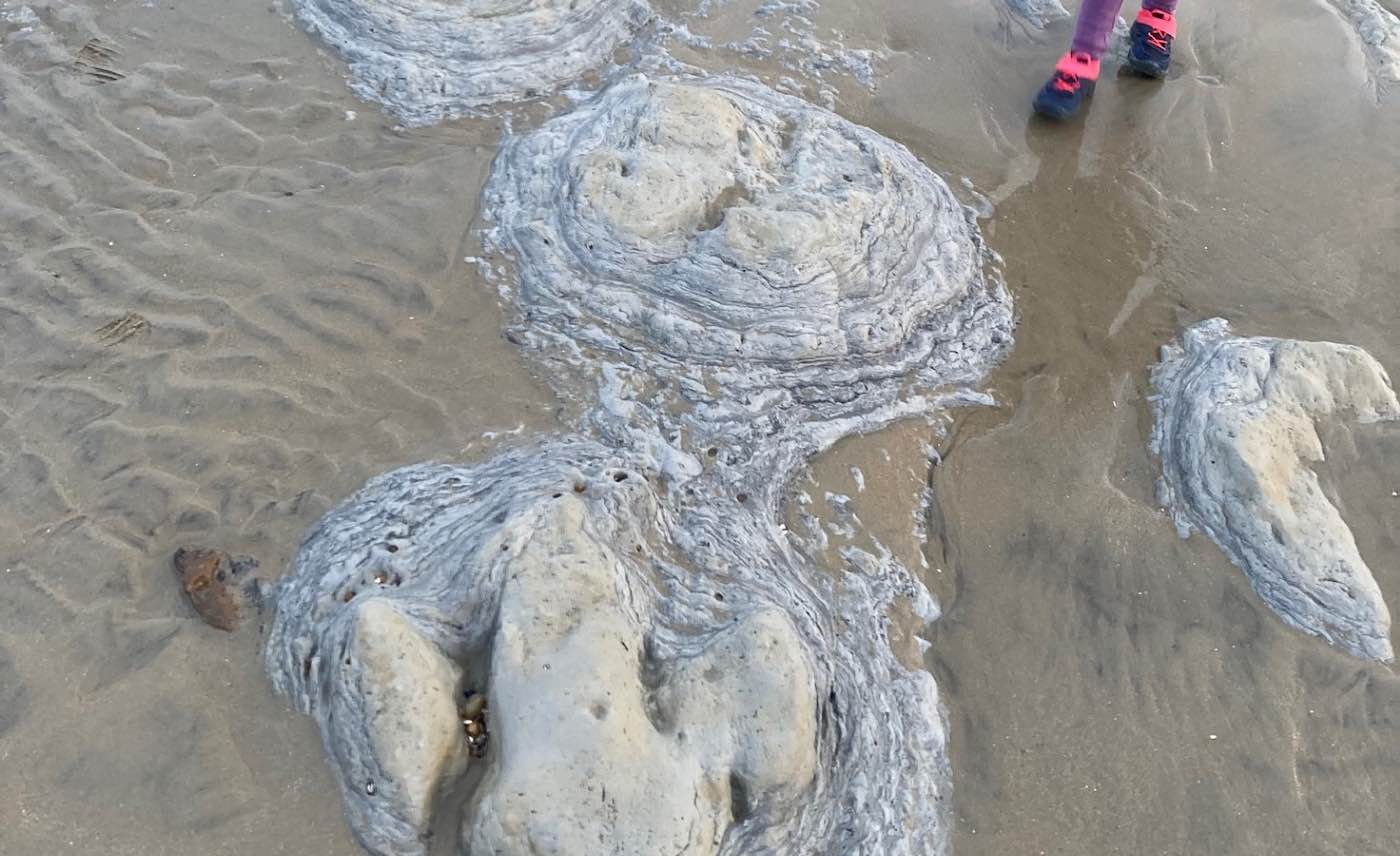 Dinosaur footprints on the beach in Bexhill, East Sussex – By Vicky Ballinger / SWNS Dinosaur footprints on the beach in Bexhill, East Sussex – By Vicky Ballinger / SWNSFamily Discovers 8 Huge Dinosaur Footprints While Walking on Eroded Beach (Photos): A family was strolling along an eroded beach at sunset when they discovered a trove of eight huge dinosaur footprints Vicky Ballinger and her two kids were stunned by the sight in East Sussex, England, after high tides and heavy rains had worn away the sand, exposing the rock underneath. The area from Bexhill-on-Sea to Fairlight has become known for its track casts and prints of dinosaurs. “I grew up in Bexhill and I’ve never seen these ones before,” says Vicky. “I believe they are iguanodon footprints. They’re not T-rex tracks (because) they weren’t in England.” Vicky went to the local Bexhill Museum with her discovery, and they’re investigating further this week. She also uploaded her video to YouTube (see below). “The kids loved that they could see the track of a dinosaur and walk where it walked. It was very exciting.” 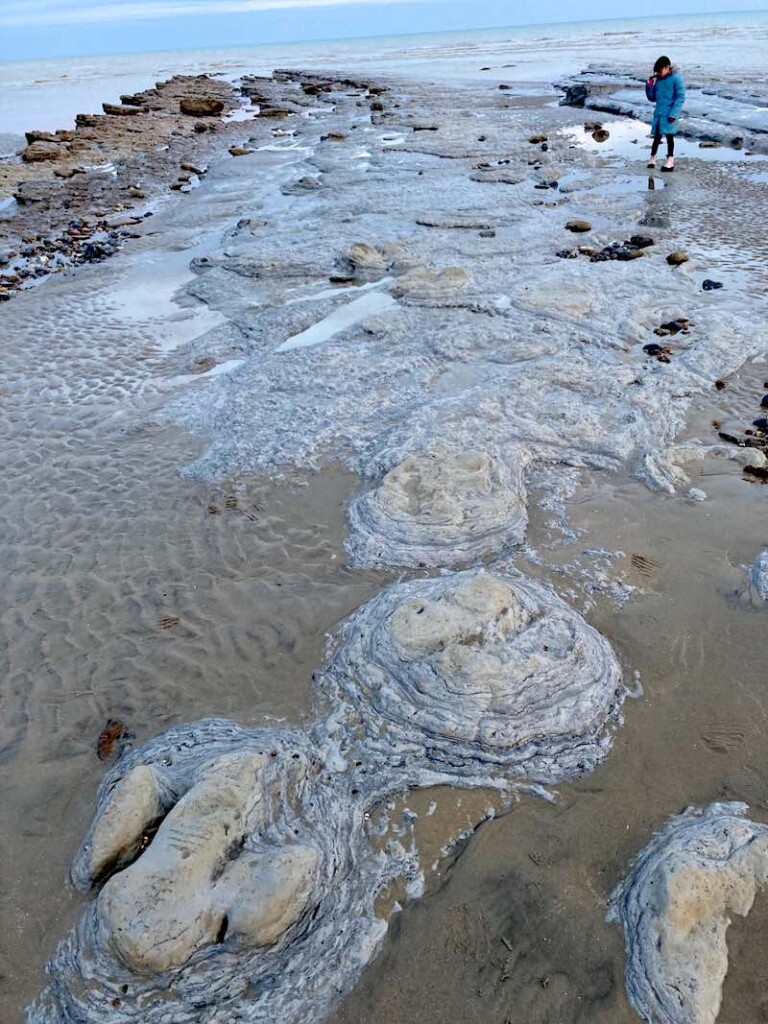 In 2018, more than 85 footprints from the Cretaceous period made up of at least seven different species were uncovered by the cliffs between Hastings and Fairlight—including the fine detail of skin and scales. Another fossil discovered on Bexhill beach was confirmed as a ‘pickled’ dinosaur brain. The Bexhill site dates back to around 140 million years ago and contains the remains of dinosaurs that used to roam in the freshwater surroundings of the period. “It’s quite beautiful to find these amazing dinosaur footprints when we came on a walk.” Over the years, the fossils of several dinosaur species have been found including Iguanodon, Megalosaurus, Baryonyx, Polacanthus, and the tooth of a Velociraptor-type animal, many of which are on display at the Bexhill Museum.Check out her lovely video below…Family Discovers 8 Huge Dinosaur Footprints While Walking on Eroded Beach (Photos) |
New discovery to make cancer less painful
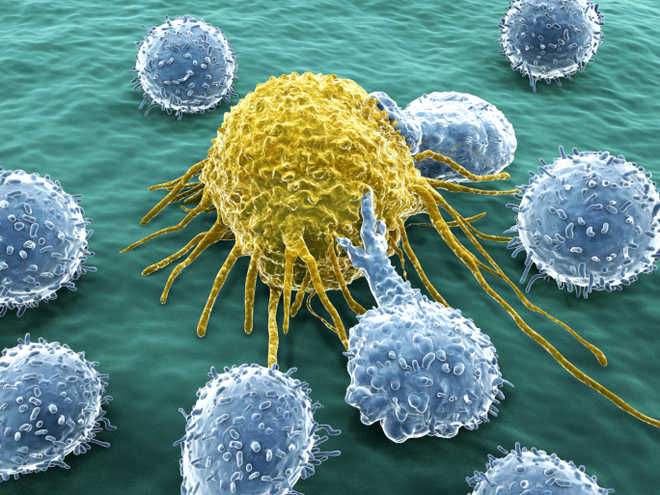
Toronto: Scientists have discovered the trigger behind the most severe forms of cancer pain that can potentially lead to better pain management in cancer patients. The study identified the culprit — a gene that is also responsible for some of the most aggressive forms of androgen-fuelled cancers. Visible on the surface of the cancer cells, the gene TMPRSS2 comes in contact with the body's nerve pain receptors, which then trigger the pain, the study found. “Prostate cancer research already knows that if you have the TMPRSS2 gene marker, the prostate cancer is much more aggressive. They have also shown that this is androgen (male hormone) sensitive,” said lead researcher David Lam from the University of Toronto. In this study, Lam found that this gene was not only present in patients suffering from head and neck cancers, it was also prevalent in much greater quantities in prostate cancer. The more TMPRSS2 that comes into contact with nerve pain receptors, the greater the pain, found the researchers. Lam and colleagues followed up this observation by looking at different types of cancers with known pain associations. According to clinical data, head and neck cancer are the most painful form of cancers, followed by prostate cancer, while melanoma, or skin cancer, is at the bottom of the pain scale. But what surprised the researchers was that the presence and numbers of TMPRSS2 in these cancer cell cultures stood in exact correlation with the known level of pain each cancer causes. The discovery of TMPRSS2's role in triggering cancer pain may lead to the creation of targeted cancer pain therapies that effectively shut down the expression of this gene or its ability to infiltrate pain receptors in the body. The study was published in the journal Pain. — IANS. Source: Article
|