
 Recology Recycling Center, where ‘junk’ is being dropped off, and Artists-in-Residence may scavenge 19-12-2025, San Francisco’s Trash Company Marks 35 Years of Stunning Art Made of Recycled Garbage With Free Gallery Opening: Inside San Francisco’s 47-acre recycling and recovery center at the dump, where small businesses and residents can bring truckloads of cast-offs, artists have special access to a churning, ever-changing landscape where detritus from all over the city is sorted and processed. In fact, more than 100 tons of material enter the building every day. Besides just being the waste management company, Recology’s mission is to conserve resources and reduce waste, inspiring a more mindful relationship with the things we throw away. To that end, we need artists. Since 1990, Recology has run an Artist-in-Residence program that supports Bay Area artists, giving them freedom to scavenge materials for use in creating artworks. The four-month residency also provides artists with access to studio space and a stipend. Armed with safety gear and a shopping cart, artists have scavenging privileges in the Public Reuse and Recycling Area to reimagine the discarded waste as art objects. “The artists love the access,” Recology spokesperson Robert Reed told GNN. “The materials dropped off are varied and interesting.”  Recology Artist In Residence Neil Mendoza scavenging through trash with shopping cart Recology Artist In Residence Neil Mendoza scavenging through trash with shopping cartThe artists, like Neil Mendoza (pictured above), then wheel their carts of reclaimed materials to an art studio/workshop, equipped with tools that Recology maintains at the transfer station. At the end of each residency, a free-to-the-public exhibition of the artworks created is held in the studio. On Saturday, the resulting creativity from dozens of Artists In Residence was on full display as 2,000 people attended the opening of a free exhibition featuring 35 years of artwork—a retrospective embodying the phrase ‘trash to treasure’. 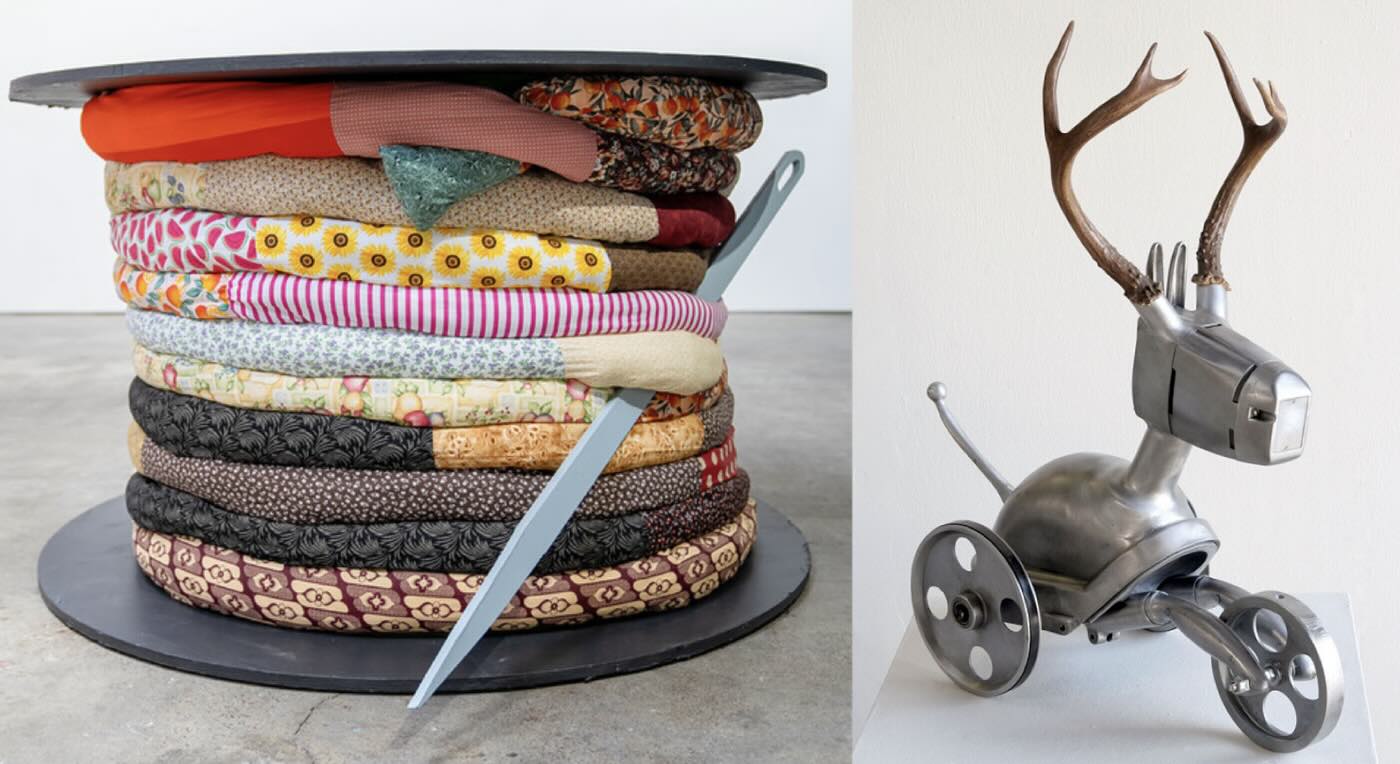 ‘Mother Spool’ by Nimah Gobir (Photo by Minoosh Zomorodinia for Recology) and ‘Impala’ by Nemo Gould ‘Mother Spool’ by Nimah Gobir (Photo by Minoosh Zomorodinia for Recology) and ‘Impala’ by Nemo GouldWhile the approaches and themes vary widely among the 63 artists featured, a shared thread runs through it all: the possibilities of transformation through reuse. For instance, in 2007 Nemo Gould created the Impala sculpture (pictured above, right) by scavenging antlers, a power sander, bandsaw blade wheels, projector flywheel, vacuum cleaner handles, a meat grinder, motorcycle clutch, and cheese slicers. Over the past 35 years, the Residency program has hosted more than 190 professional artists and 60 student artists from local colleges and universities. These artists, emerging, mid-career, and established, have worked across a wide range of disciplines, including painting, sculpture, video, photography, installation, performance, and new media. The gallery exhibit—a collaboration between Recology and The Minnesota Street Project, at 1275 Minnesota Street in San Francisco—runs through Aug. 30, 2025 and is free to the public, according to the news release here. “It’s a great, no cost opportunity for families to see art this summer,” says Reed. “We also have a traveling exhibition touring the country.” 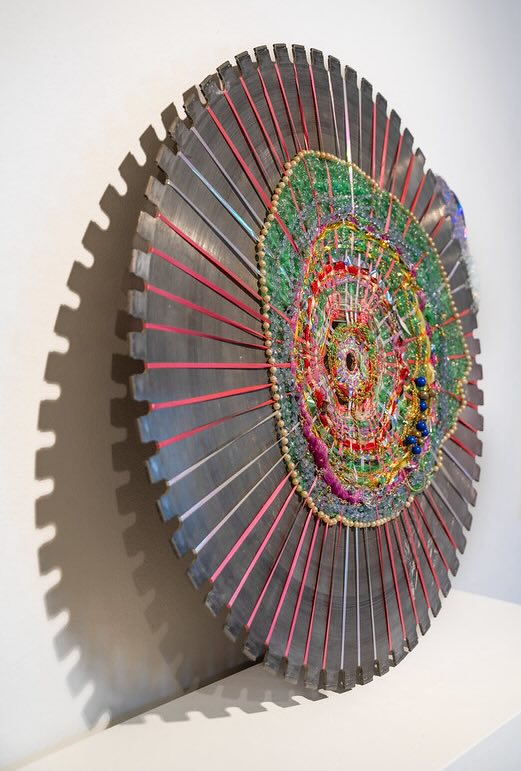 Adorned Saw by Eleanor Scholz uses embroidery thread, ribbon, jewelry, keys, bubble wrap, mylar, plastic, and DVDs – Photo by Minoosh Zomorodinia for Recology Adorned Saw by Eleanor Scholz uses embroidery thread, ribbon, jewelry, keys, bubble wrap, mylar, plastic, and DVDs – Photo by Minoosh Zomorodinia for RecologyThe traveling exhibit, which includes Impala, is called Reclaimed: The Art of Recology. It presents a selection of works from 33 fascinating artists who were selected to participate in the company’s unique Residency. This eclectic exhibition of work includes around 50 objects: from paintings produced with recycled house paint to tapestries made from used ties, shirts, and other fabrics. From sculptural vases crafted from Ethernet and coaxial cables to ever more hybrid concoctions that are often mind-blowing in execution and form. The traveling show can be found currently in Traverse City, Michigan at the Dennos Museum Center at Northwestern Michigan College until Aug. 31, 2025. 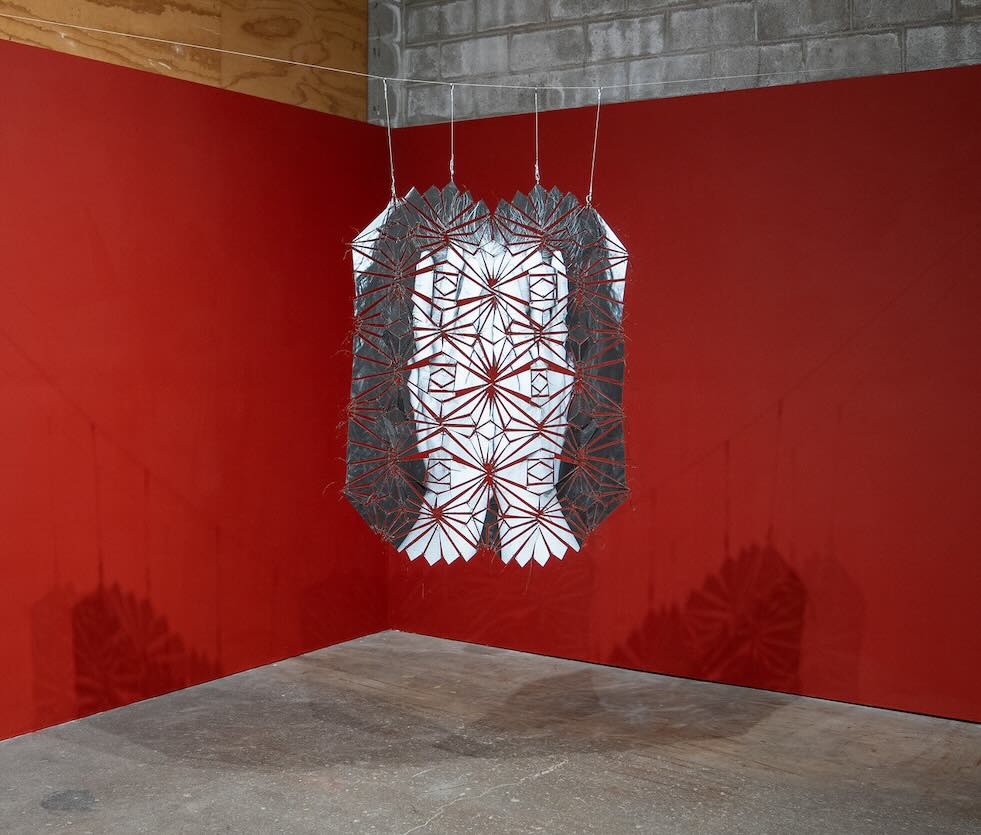 Knots of Reflection by Nasim Moghadam (mirror, archival pigment print, and Iranian female hair) Photo by Minoosh Zomorodinia Knots of Reflection by Nasim Moghadam (mirror, archival pigment print, and Iranian female hair) Photo by Minoosh ZomorodiniaOn October 4, it opens in Pueblo, Colorado, showing at the On Sangre de Cristo Arts & Conference Center until Dec. 14, 2025.There are three shows booked for 2026 in the cities Carlsbad, New Mexico in January; Canton, Ohio in April; and Syracuse University Art Museum in September. San Francisco’s Trash Company Marks 35 Years of Stunning Art Made of Recycled Garbage With Free Gallery Opening |
Artist Creates Striking Portraits ...
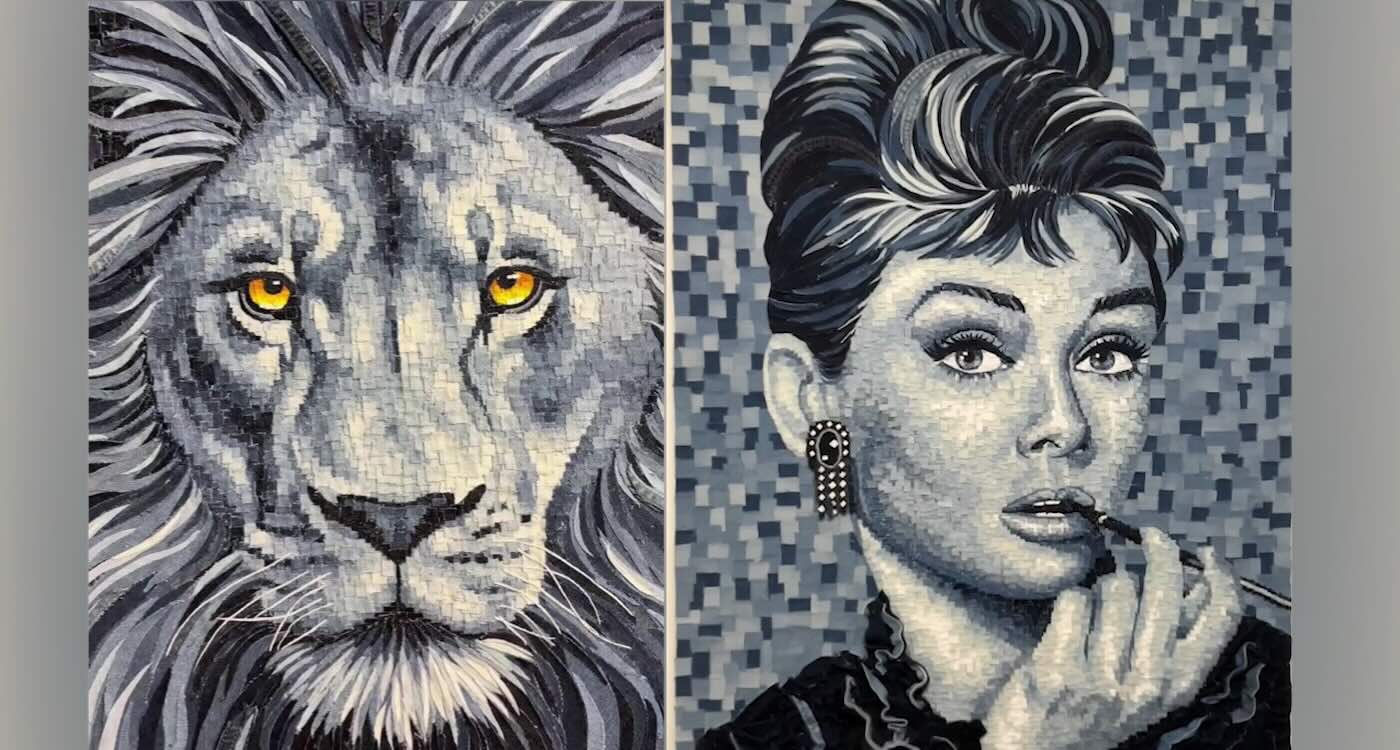 Artist Cristiam Ramos portraits made from cut up denim jeans – SWNS Artist Creates Striking Portraits Out of Old Denim Jeans Cut into Tiny Pieces (WATCH): Meet the artist who is turning old denim jeans into striking works of art. Cristiam Ramos creates intricate portraits of celebrities and animals using nothing but tiny squares of cut-up denim. By carefully piecing together the different shades of fabric, Cristiam produces portraits that are as detailed as they are unique. Each artwork takes around a month to complete and cannot be replicated. With prices ranging from $9,000 to $15,000 (£6,800–£11,000), Cristiam’s denim subjects include Hollywood icons Marilyn Monroe, Audrey Hepburn, and David Bowie, alongside majestic animals such as lions and leopards. “Each piece takes me about a month depending on the size and complexity of the portrait,” said the Mexican artist based in Orlando, Florida. “I work eight hours a day, and the price depends on the size, but they are all unique and unrepeatable,” said the 45-year-old. 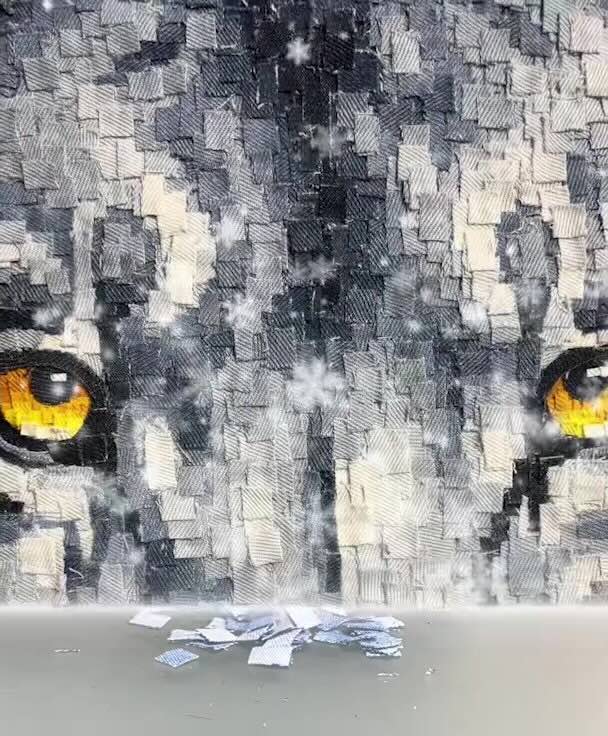 Close up of denim art by Cristiam Ramos – SWNS “Each piece will always be different from the other and my collectors will always have a unique piece.” (Watch a video showing him at work below…) Cristiam began using denim as a medium four years ago after finding inspiration in his own pair of worn out jeans. He has continued to be inspired by denim, and what it represents to him in his art. “One day, I ran into a pair of jeans from my adolescence,” he told SWNS news agency. “For some reason, I couldn’t separate myself from them. 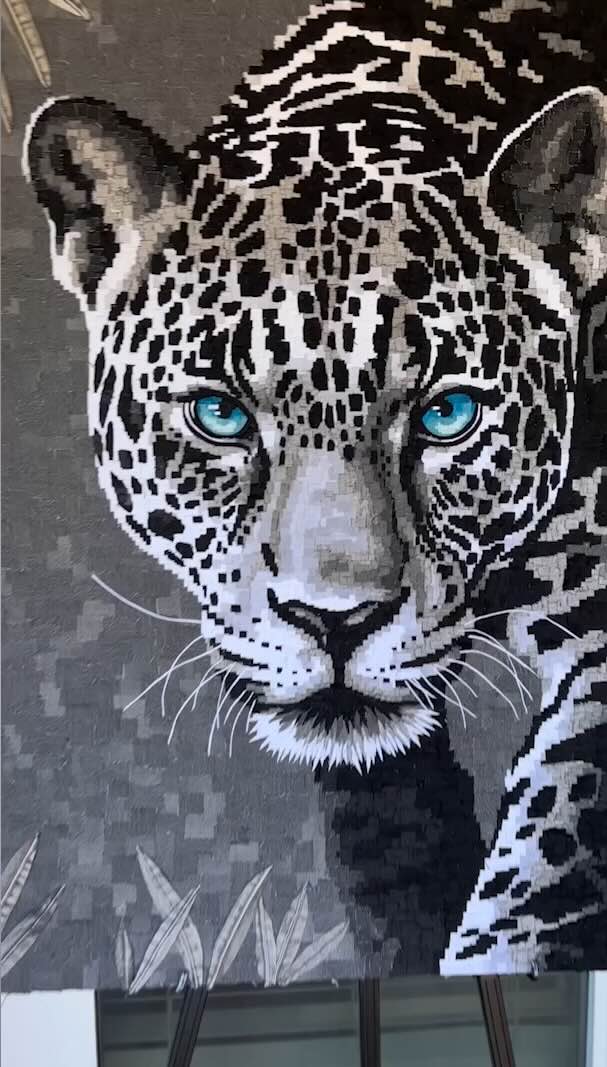 Cheetah in denim art by Cristiam Ramos – SWNS “At that moment, I realized that denim carries life inside its fibers: memories, moments and the strength of time itself. “I think this is a powerful message for all of us.” “No matter how worn out we feel, we always have the power to transform ourselves into something beautiful.”WATCH him at work… |
Chinese artist recreates Monet's water lilies
.jpg) Chinese artist recreates Monet's water lilies using 650,000 Lego pieces: When the Chinese artist Ai Weiwei opens his new show in April, visitors will encounter a familiar scene at London's Design Museum: Claude Monet's famed water lilies. But rather than being composed of the French painter's Impressionist brushstrokes, the monumental recreation is made from the studs of Lego bricks — a whopping 650,000 of them in 22 different colors, CNN reports. Titled "Water Lilies #1" the nearly 50-foot-wide piece is the largest Lego artwork Ai has ever made, according to the museum. His version depicts the idyllic lily ponds of Monet's home in Giverny but includes, on the far right-hand side, a "dark portal" alluding to Ai's childhood in China's Xinjiang region. The patch of dark Legos represents the door to an underground dugout where the artist lived with his father in exile during the 1960s, according to a museum press release. "In 'Water Lilies #1' I integrate Monet's Impressionist painting, reminiscent of Zenism in the East, and concrete experiences of my father and me into a digitized and pixelated language," Ai said in a statement. "Toy bricks as the material, with their qualities of solidity and potential for deconstruction, reflect the attributes of language in our rapidly developing era where human consciousness is constantly dividing."  Ai has used a range of materials in his installations and conceptual artworks, from pottery, wood and porcelain to film, photography and found objects. In the late 2000s, the artist and activist added Lego bricks to his repertoire. These colorful, meticulous works include hundreds of portraits of political prisoners and exiles, created by Ai for a 2014 exhibition. The following year, the artist made headlines when Lego refused his studio's request for bulk orders of the bricks for a new project, a move he described as "censorship" (The Danish company later reversed its decision).During the controversy, Ai's fans and members of the public sent him their own Lego blocks, and these donated bricks will also be displayed at his new London show in an installation called "Untitled (Lego Incident)."Source Article |
Simplicity Glasswork by Cecilie Manz
 Series of mouth-blown glass for Holmegaard A/S. "The name Simplicity refers to the simple and aesthetic shapes." The sculptured pieces are created in transparent glass in the colors smoke and purple, which truly enhance the expression of their beautiful silhouettes. The both simple and voluminous proportions strike an undertone of elegance. With the soft, round and classic shapes, Simplicity sends its regards to design of the 1950's and also to Holmegaard's rich history of tradition.    |
Meerschaum - Creative Vintage Pipes
 Meerschaum - Creative Vintage Pipes - Meerschaum or French name for the same substance – écume-de-mer, we call it “sea foam”. As the use of meerschaum pipes slowly change color, and very old are more shades of yellow, orange and red colors.                |
Just Doing What Comes Naturally
 Dance - Just Doing What Comes Naturally Human beings probably danced even before there was a word for it. Rhythmic bodily movement is instinctive. It connects people, even if unconsciously, to the rhythms of nature. The grounded movement is notably different from ballet's upward lift - itself in relation to western melodic forms. Dance is a form of expression that supersedes verbal language; it is possible to convey far more meaning in a sweeping gesture than a simple phrase. Dance springs from a human desire for personal expression and social connection. and it feels good.              |
Serpentine sackler gallery by zaha hadid
  The Serpentine Sackler Gallery, designed by Pritzker Architecture Prize Zaha Hadid, opens to the public on Saturday 28 September 2013 in London. The Serpentine Sackler Gallery gives new life to The Magazine, a former 1805 gunpowder store, located five minutes walk from the Serpentine Gallery on the north side of the Serpentine Bridge. With 900 square metres of new gallery, restaurant and social space, the Serpentine's second space in Kensington Gardens is a new cultural destination in the heart of London. From this autumn, the Serpentine presents its unrivalled programme of exhibitions and events across both Galleries and into the Park. .jpg)  The opening exhibition in the Serpentine Sackler Gallery is the first UK exhibition by the young Argentinian artist Adrián Villar Rojas, who is on the brink of gaining international renown for his dramatic, large-scale sculptural works. At the same time, in the Serpentine Gallery, there will be a major retrospective by Italian sculptor Marisa Merz, who received a Lifetime Achievement Award at the 2013 Venice Biennale. A redesigned website will feature the inaugural Digital Commission, while the first annual Bridge Commission explores the route between the two galleries with a series of short stories by twelve internationally acclaimed writers. Each story is timed to last as long as it takes to walk from the Serpentine Gallery to the Serpentine Sackler Gallery. The Serpentine's expanded presence in Kensington Gardens will be illustrated by a specially commissioned map by the artistMichael Craig-Martin.      |